
Stroke
Home / Stroke
What is a stroke?
1 in 5 people will have a stroke at some point during their life.
Every year, 15 million people worldwide suffer a stroke. Nearly six million die, and another five million are left permanently disabled.
Stroke is the second leading cause of disability, after dementia. Disability may include loss of vision and/or speech, paralysis and confusion. Globally, stroke is the second leading cause of death above the age of 60 years, and the fifth leading cause of death in people aged 15 to 59 years old.
A stroke occurs when blood supply to the brain is disrupted. Blood is transported to the brain by blood vessels called arteries. Blood contains important nutrients and oxygen to your brain. Blood may stop moving through an artery because the artery bursts (hemorrhagic stroke) and or the artery is blocked (ischemic stroke) When the brain cells are not getting enough nutrients or oxygen, they die. The area where the brain has been damaged is called a cerebral infarct.
Stroke is less common in people under 40 years, although it does happen. In young people, the most common causes are high blood pressure or sickle cell disease. In many developed countries, the incidence of stroke is declining even though the actual number of strokes is increasing because of the ageing population.
A stroke is a medical emergency.
Knowledge is power. Recognising the signs and acting quickly is crucial.
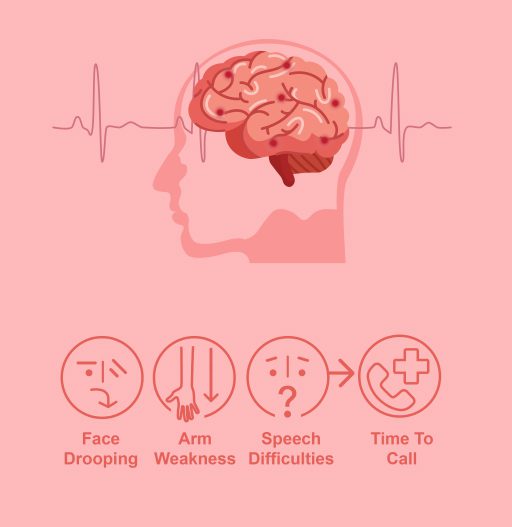
Signs of a stroke:
- Facial weakness: Can the person smile? Has their eye or mouth drooped?
- Arm weakness: Can they lift both arms? Is one arm weak, drooping or numb?
- Speech difficulty: Is speech slurred? Do they understand you?
- Time: It is time to call 112 or 999 if you see any of these signs. Time is critical.
Other signs:
- Weakness or paralysis on either one or both sides of the body
- Unexplained fall, loss of balance or coordination
- Loss of vision in one of both eyes, sudden blurred vision
- Sudden confusion or memory loss
- A sudden, severe headache, dizziness
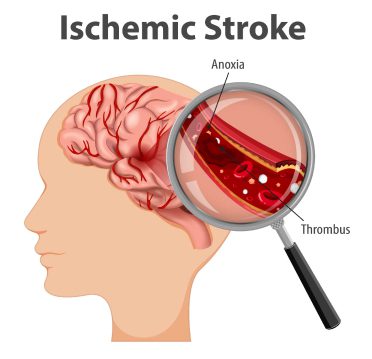
Types of stroke:
Ischaemic stroke This is the most common type of stroke – more than 80% of strokes are ischaemic strokes. An ischaemic stroke is caused by a blockage cutting off the blood supply to part of the brain which damages brain cells. An example of this is the narrowing of arteries. Damage to brain cells can affect how the body works.
- Embolic Stroke: This is caused by a blood clot or plaque fragment forms somewhere else in the body, usually the heart. The clot moves through the blood stream to the brain. When the clot arrives to the brain, it is too big to pass through a blood vessel and gets stuck. This stops the blood passing through and causes an Embolic Stroke.
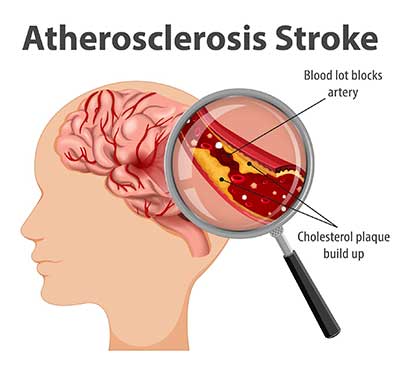
- Thrombotic Stroke: This occurs when a clot forms in an already narrowed or damaged artery within the brain and blocks the supply of blood to that area. Atherosclerosis (the build-up of a fatty substance called plaque) is the most common cause of narrowing of the arteries. Lifestyle risk factors can contribute to Atherosclerosis including high blood pressure, high cholesterol, obesity, smoking, diabetes and reduced physical activity.
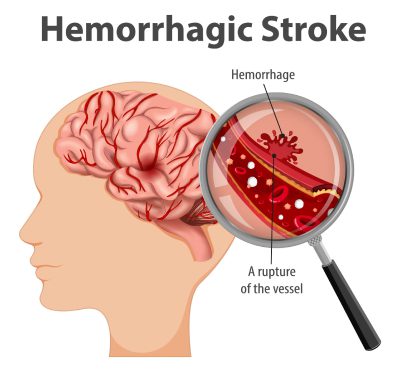
Haemorrhagic Stroke Haemorrhagic stroke is caused when a weakened blood vessel that supplies the brain ruptures and bleeds, stopping the delivery of oxygen and nutrients. The interrupted blood flow causes damage to the brain.
- Intracerebral Haemorrhage: This occurs when an artery inside the brain bursts and bleeds into the brain. High blood pressure contributes to weak arteries over time.
- Subarachnoid Haemorrhage: This is bleeding on the subarachnoid space. There are 3 layers of membrane (or meninges) that cover the brain. A subarachnoid haemorrhage is a bleed that happens between the layer closest to the brain and the second layer.
Transient Ischaemic Attack (TIA)
A Transient Ischaemic Attack (TIA), also known as a ‘mini stroke’ occurs when blood supply to the brain is blocked temporarily, often for a few minutes.
Up to 90% of strokes are preventable so knowing your risk factors is the first step in preventing a stroke. The greater the number of risk factors, the greater the likelihood is of you getting a stroke. You may be at a higher risk if there is a family history of stroke or if you have had a TIA or heart attack. In addition, people from Asian, African and African-Caribbean communities are also more likely to have a stroke.
- High blood pressure is the leading cause of stroke. One of the most important things you can do to reduce your stroke risk is to know your blood pressure reading and keep it under control (<140/90). Smoking damages the lining of blood vessels leading to blockages within the blood vessels in the brain. If you smoke, quitting reduces your risk of heart disease and stroke. It is also best to avoid second-hand smoke from other smokers.
- Having diabetes almost doubles your risk of stroke. You can manage your diabetes and keep it well controlled with diet, exercise, weight control and medication.
- An abnormal heart rhythm called atrial fibrillation can increase your risk of stroke five times. The irregular heartbeats can cause blood to collect in the heart and potentially form a clot, which can travel to the brain and block the blood supply (embolic stroke).
- Other factors that can lead to stroke include, high cholesterol, being overweight and obese, sleep apnoea, excessive alcohol intake, having an inactive lifestyle, having other heart or artery disease and certain blood disorders.
Many of these risk factors can be reduced by making positive lifestyle changes.
Not all strokes are the same and no two people are affected by stroke in the same way. The effects of a stroke depend on the area of the brain affected and the extent of the damage to your brain. Recovery is different for each person too. Some people may recover completely whereas others may be left with more serious disabilities or even die. Recovery is usually a gradual process and can take months as the brain heals.
The brain has two sides and a stroke on the left side of the brain will affect the right side of the body and vice versa. Some functions that may be impaired as are follows:
- Damage to the left side of the brain means you may have problems moving the right side of your body, figuring out mathematical and science problems, difficulty with speech and language, or understanding what you hear and read.
- Damage to the right side of the brain means you may have problems moving the left side of your body. Doing creative things like painting, playing music, and making sense of what you see, hear and touch may be more challenging. In addition, you may find it difficult to recognise various types of emotions in others.
Someone who has had a stroke may also experience other physical and emotional changes depending on the part of the brain that was affected. These include:
- Weakness in the arm, leg, face or weakness on one side of the body which can affect movement.
- Problems with balance and coordination.
- Pain, numbness or altered sensations in the body.
- Fatigue
- Interrupted vision or vision loss.
- Difficulties with concentration, memory, understanding and communication.
- Issues with swallowing, continence, tiredness, behavioural changes and depression.
Some symptoms may improve in time and many people can make a good recovery following a stroke. Early treatment, appropriate medication and rehabilitation all have an impact on the final outcome.
Knowing the warning signs of stroke and seeking immediate medical help can improve the outcome of a stroke. The symptoms of a stroke appear suddenly and there is often more than one symptom at a time. These are some of the signs to watch out for if you or someone else may be having a stroke:
- Numbness, weakness or paralysis of an arm, leg or face, particularly on one side of the body
- Problems with balance or co-ordination
- Blurred vision or sudden loss of vision in one or both eyes
- Difficulty speaking, slurred speech or difficulty understanding other people
- Confusion
- Sudden severe headache which may be accompanied by dizziness or vomiting
- Loss of consciousness.
Stroke is a medical emergency. The longer a stroke goes untreated the greater the potential for brain damage and disability. If you suspect you or someone else is having a stroke, dial 999 or 112 to call an ambulance immediately. The quicker they get to a hospital, the quicker they can be treated. Early detection and treatment can prevent further damage to the brain and reduce the chances of long-term disability or even death. Every second counts.
Tip: Know your Eircode and keep it close to the phone.
The above information is gathered from the World Stroke Organisation.
If you have any questions or concerns, contact the Croí Health Team by calling 091-544310 or emailing healthteam@croi.ie.